

Tutorials
Adaptive Beamforming Made Practical: A Guided Classroom Experience with Real-Time Classroom Experiments
Thursday, October 22
Adaptive beamforming is driving the adoption of larger, all-digital electronically steerable arrays (ESAs/phased arrays). However, the underlying concepts and mathematics can often feel abstract and challenging to grasp. In this hands-on workshop, we will bridge that gap by building and implementing our own multi-channel adaptive beamformers.
Participants will explore the principles of adaptive beamforming and learn how to mitigate interference and jamming in real-world scenarios. Through concise lectures and guided exercises, we will cover key algorithms step-by-step, including deep dives into popular approaches such as LMS and MVDR/LCMV. Attendees will then design and implement their own multi-channel adaptive beamformers using real data collected from a digital beamformer available in the room.
To ensure an interactive experience, all datasets and Python scripts will be provided, enabling participants to perform labs directly on their laptops. By the end of the session, attendees will gain both intuitive and technical mastery of adaptive beamforming through a unique blend of theory and practice.
Who Should Attend
RF engineers and system designers working with phased arrays or ESAs
Signal processing professionals interested in adaptive algorithms
Researchers and students seeking practical experience with beamforming
Anyone looking to bridge the gap between theory and real-world implementation
Key Takeaways
Understand the fundamentals of adaptive beamforming and how to choose the best implementation for your system
Gain hands-on experience implementing adaptive algorithms
Learn techniques for interference and jammer mitigation in practical scenarios
Acquire skills to design, analyze, and optimize beamforming solutions using real-world data
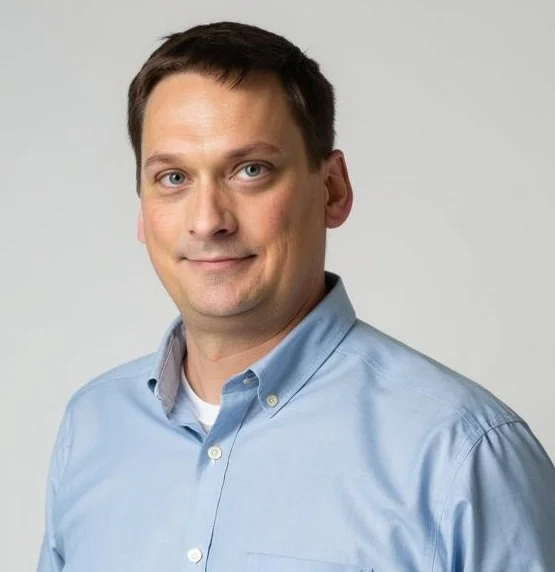
Jon Kraft is a Senior Principal Engineer at Analog Devices specializing in software-defined radio, phased array antennas, radar systems, and RF signal processing. He is widely recognized for his work in engineering education, developing practical demonstrations that make advanced phased array and radar concepts accessible to engineers, researchers, and students.
As architect of the CN0566 Software Defined Phased Array Radar (the "Phaser"), Jon has helped establish one of the industry's most widely used platforms for hands-on phased array experimentation and learning. A frequent presenter at IEEE Radar Conferences, he is known for delivering interactive workshops that bridge the gap between phased array theory and real-world implementation. Through conference presentations, university collaborations, and his extensive YouTube content, he has provided thousands of engineers with practical insight into beamforming, radar, electronic warfare, and RF system design.
Jon holds B.S.E.E. and M.S.E.E. degrees from Rose-Hulman Institute of Technology and Arizona State University, respectively, and is the inventor on 10 issued patents.
Tarun Cousik
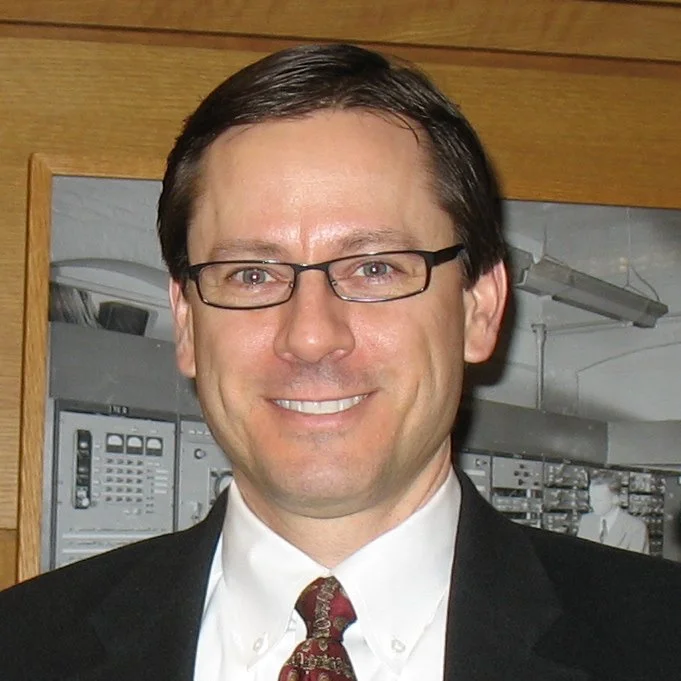
Mark Yeary received his Ph.D. from the Department of Electrical Engineering, Texas A&M University, College Station, TX and since fall 2002, he has been with the School of Electrical & Computer Engineering at the University of Oklahoma where he is currently a professor. As of 2005, he was a founding member of the Advanced Radar Research Center (ARRC), which is now the largest university-based radar center in the nation. His research interests are in the areas of digital signal processing and radar systems with an emphasis on hardware prototype development. In 2012 and 2013, he was with the MIT Lincoln Laboratory, Lexington, MA, USA, on sabbatical. He is a licensed Professional Engineer and IEEE Fellow.