

Plenary Session
Plenary Session
Monday, October 19, 2026 - 1:30pm
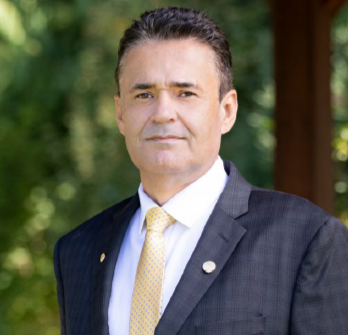





Dr. Julio Navarro - Principal Senior Technical Fellow, The Boeing Company
Advances in low-loss RF materials, microwave monolithic devices, multi-layer ceramics, multi-layer printed wiring boards, along with advanced die attachment and heterogeneously integrated electronics are driving innovations in aerospace systems across terrestrial, airborne, naval and space environments. Read more
Recent Space Antenna Developments and RF Testing Capabilities at European Space Agency
Dr. Salvatore D’Addio - Head of RF Payloads and Technology Division at the European Space Agency
The talk provides an overview of recent technology developments and R&D activities supported by the European Space Agency for next generation spaceborne Radio Frequency Payloads and Instruments, including in particular developments on phased arrays antennas, large antennas, critical RF technologies, and on-board digital processing functions. Phased array antenna systems under development for major ESA missions are also presented as well as recent architectural trends and critical requirements of future space RF payloads based on those. The RF testing capabilities and future plans at the European Space Agency are also introduced. Read more
Methods and Challenges for Wideband, Multi-function Arrays
Chris Ison - Vice President of Engineering, MMIC Business Unit, MACOM
Radar, EW and communication systems are common throughout C, S, X, to Ku-band. Large platforms have multiple phased array systems while smaller platforms may be limited to only a single system due to size, weight, and cost issues. The benefits of a single, wideband system that can support multiple functions are clear and the need to combine functions into a single system has never been higher. Yet these systems are not prevalent today. This presentation discusses the key technologies and challenges for wideband phased arrays, including power amplifier efficiency, wideband beam steering, element sizing constraints, packaging and thermal considerations and cost. It will cover the latest advancements in these areas that will make wideband arrays realizable in the future. Read more
Millimeter Wave Phased-Array Tiles: An Application of Microelectronics Packaging
Dr. Timothy M. Hancock - Principal Technical Fellow and Director of Microelectronics, Raytheon Advanced Technology
At millimeter wave frequencies there is an increased need for wideband and multiband sensors with tactically relevant transmitter power densities. This requires a level of integration beyond what is possible from silicon technology alone but must leverage high-yield batch manufacturing to manage touch labor and cost. This talk will discuss on-going work within Raytheon in conjunction with the Texas Institute for Electronics as part of the DARPA Next Generation Microelectronics Manufacturing program where 3D heterogenous integration is being applied to combine high power MMICs with planar stripline interconnect, integrated liquid cooling for thermal management and digital beamforming ASICs to achieve a scalable tile-base architectures for applications in the Ku- to W-band. Read more
SKA-Low: The World’s Largest Phased Array?
Prof. David Davidson, FIEEE, Professor, International Centre for Radio Astronomy Research, Curtin University
Radio astronomy will shortly celebrate its centenary, which will be marked by the commissioning of one of largest radio telescopes in the world, the international Square Kilometre Array Observatory (SKAO). For many years, the popular image of a radio telescope has been a very large dish; however, SKA-Low, the low frequency component of the SKAO, is a multi-scale phased array – also known as an aperture array in radio astronomy. At its lowest level, arrays of 256 dual-polarised log-periodic antennas make up a station. It is intended to deploy 512 such stations. Around half of these are grouped into a central compact core measuring 1 km across, with the rest distributed in three approximately spiral arms radiating out from the centre across a huge area in Western Australia. Each station is a fully-digital phased array, using real-time beamforming to create station beams. Read more
Will We Ever Communicate via Evanescent Wave?
Prof. Thomas L. Marzetta, Clark Distinguished Chair Professor, ECE Department, University of Maryland
Normal to the array, evanescent waves decay exponentially fast and carry only reactive power. However, parallel to the array, evanescent waves can transport real power and they do not decay exponentially. In principle, evanescent waves can be harnessed for super-directive gain – but in end-fire operation only. To create evanescent waves in any arbitrary direction would require a 3D array. In short, everyone has been looking in the wrong direction to observe the possible benefits of sub-half-wavelength spacing. Read more