

Plenary
Millimeter Wave Phased-Array Tiles: An Application of Microelectronics Packaging
At millimeter wave frequencies there is an increased need for wideband and multiband sensors with tactically relevant transmitter power densities. This requires a level of integration beyond what is possible from silicon technology alone but must leverage high-yield batch manufacturing to manage touch labor and cost. This talk will discuss on-going work within Raytheon in conjunction with the Texas Institute for Electronics as part of the DARPA Next Generation Microelectronics Manufacturing program where 3D heterogenous integration is being applied to combine high power MMICs with planar stripline interconnect, integrated liquid cooling for thermal management and digital beamforming ASICs to achieve a scalable tile-base architectures for applications in the Ku- to W-band.
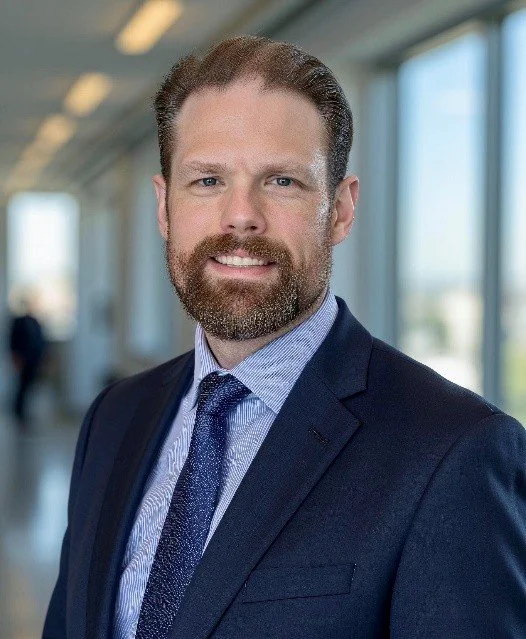
Dr. Timothy M. Hancock is a Principal Technical Fellow and Director of Microelectronics for Raytheon Advanced Technology where he leads business capture strategy of R&D funding that aligns to Raytheon investments in GaN semiconductors, silicon ASIC development, filter technology and 2.5D/3D heterogenous integration and packaging.
Prior to joining Raytheon, he was a program manager for 6 years at the Defense Advanced Research Projects Agency (DARPA) within the Microsystems Technology Office (MTO) where he started programs in millimeter wave phased arrays, wideband tunable filters, signal cancellers and transceivers for electronic warfare applications as well as millimeter wave GaN maturation and next generation digital processor technology for RF array applications.
Earlier in his career he was with MIT Lincoln Laboratory where he led technology & program development in microsystem technology that spanned material growth, device development and integrated circuit & system design for DoD applications.
Dr. Hancock earned a BS degree in from the Rose-Hulman Institute of Technology and MS and PhD degrees from the University of Michigan, all in electrical engineering. He was the 2010 inaugural recipient of the MIT Lincoln Laboratory Early Career Technical Achievement Award and in 2022, he received the DARPA Superior Public Service Medal and the DARPA “Results Matter” Award for technology transition.