

Plenary
SKA-Low: The World’s Largest Phased Array?
Radio astronomy will shortly celebrate its centenary, which will be marked by the commissioning of one of largest radio telescopes in the world, the international Square Kilometre Array Observatory (SKAO). For many years, the popular image of a radio telescope has been a very large dish; however, SKA-Low, the low frequency component of the SKAO, is a multi-scale phased array – also known as an aperture array in radio astronomy. At its lowest level, arrays of 256 dual-polarised log-periodic antennas make up a station. It is intended to deploy 512 such stations. Around half of these are grouped into a central compact core measuring 1 km across, with the rest distributed in three approximately spiral arms radiating out from the centre across a huge area in Western Australia. Each station is a fully-digital phased array, using real-time beamforming to create station beams. The overall array usually forms images using interferometry, although it can also function as a higher-level phased array. The system operates over 50-350 MHz.
The LOFAR and MWA radio telescopes, commissioned some 15-20 years back, have served as precursor facilities for SKA-Low. Many of the key concepts of SKA-Low were prototyped in these systems, and they will also be briefly described, as will “focal plane arrays”. These are arrays are placed in the focal plane of a dish, to broaden the beam and accelerate surveys.
This talk will discuss the connection between aperture interferometric arrays and traditional phased arrays and outline the challenges of designing and constructing SKA-Low.
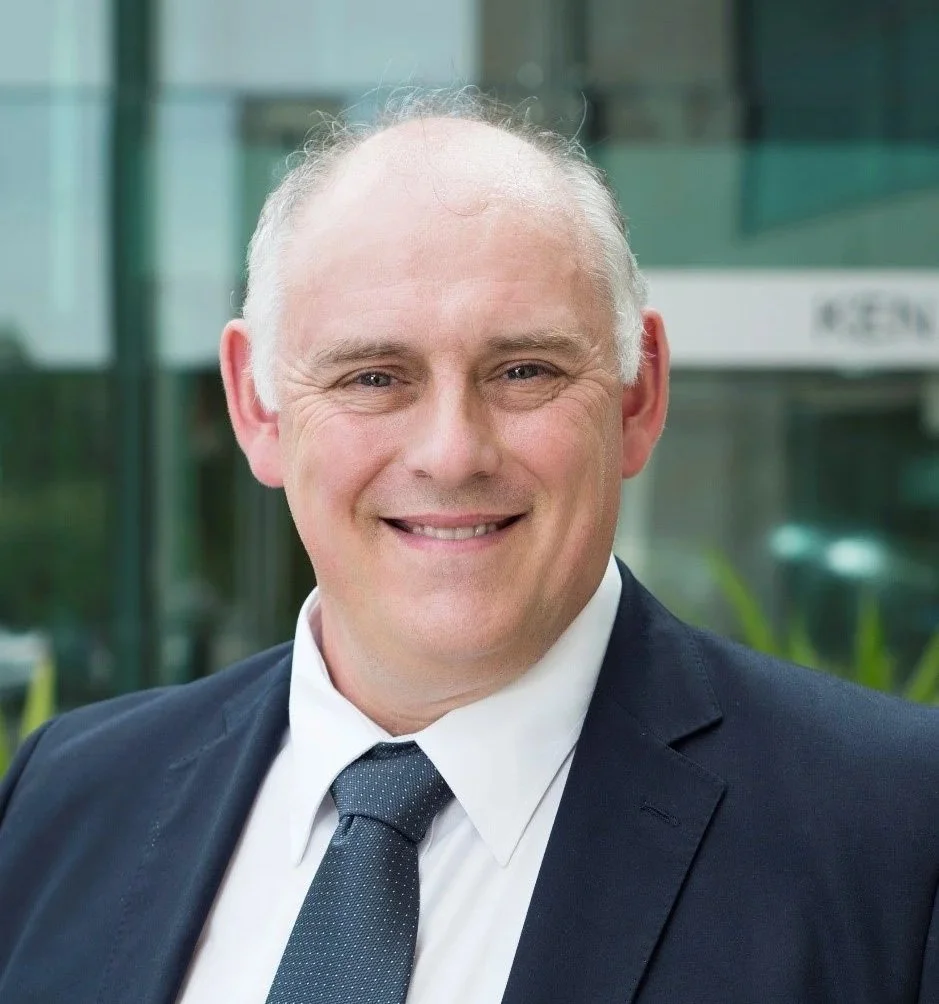
David Bruce Davidson was born in London, UK. He grew up and was educated in South Africa. He received the B.Eng, B.Eng (Hons), and M.Eng degrees from the University of Pretoria, South Africa, and the Ph.D. and D.Eng. degrees from Stellenbosch University, South Africa.
David started work at the Council for Scientific and Industrial Research, Pretoria in 1985. He spent much of his career at Stellenbosch University (1988-2017). From 2011-17, he held the SA SKA Research Chair at Stellenbosch; he was also a Distinguished Professor there and is presently Professor Extraordinary. As of 2018, he joined Curtin University, Perth, Western Australia as a Professor. He was Engineering Director of the International Centre for Radio Astronomy Research and Curtin Institute for Radio Astronomy from 2018; much of his work since joining Curtin has focussed on detailed electromagnetic simulations for SKA-Low stations.
He has held several visiting appointments, including at the University of Arizona, Cambridge University, Delft University of Technology, and the University of Manchester. His main research interest through the earlier part of his career was computational electromagnetics and his research contributed to leading commercial software. Over the last two decades, his interests expanded to include engineering electromagnetics for radio astronomy. He has published widely during his career and is the author of a widely cited text on computational electromagnetics. He is a Fellow of the IEEE and was included in the 2023, 2024 and 2025 Stanford University List of the World’s Top 2% Scientists.
He has served on a number of IEEE committees; recent service includes as Associate Editor, IEEE Transactions Antennas and Propagation (2016 – 2022) and as IEEE AP-S Distinguished Lecturer (2019-21). He has served on a number of conference committees, most recently as a TPC member for IEEE AP-S 2018-19 and 2023-25, and since 2012 as a member of the ICEAA Steering and Scientific Committees. He has served on several national committees, including the Australia Telescope National Facility Steering Committee and the South African Astronomy Advisory Council.